Stick Welding Chart: The Complete Electrode, Amperage & Settings Reference (2026)
Stick welding chart guide: amperage by rod diameter, E6010 vs E7018, polarity, positions, and troubleshooting tables for SMAW…
READ ARTICLE →# Can I Use Aluminum Brazing Rods On Steel?
Last updated: October 2026
A fence builder with a torch, a length of galvanized rail, and an aluminum gate bracket arrived at the same conclusion half the internet arrives at: the “aluminum brazing rods” in the drawer claimed to join everything — aluminum, steel, copper, brass — so surely one pass would tie the bracket to the post. He fluxed, heated, rubbed the rod across the seam, and got exactly what the video promised: a gray, tinned-looking line sitting in the joint. Three weeks later, after one good shove on the gate, the bracket separated in his hand — the filler had never bitten into the steel at all. It had sat there, mechanically keyed into surface texture and held by nothing metallurgical, and the only real “joint” had been his confidence.
That story is the aluminum-rod-on-steel question in miniature: the rod melts, the rod wets, the rod looks joined — and nothing of consequence is joined. The gap between appearance and metallurgy is where these products live, and the gap is wide enough to lose a gate, a bracket, a repair, and sometimes a project’s trust in every rod it will ever buy.
So — can you use aluminum brazing rods on steel?
No — not for any joint that has to hold. Aluminum brazing and low-temperature “aluminum soldering” rods are zinc-aluminum and aluminum-silicon alloys formulated to wet and bond to aluminum — sometimes copper and brass under specific conditions — and they do not form a metallurgical bond with steel. On steel they melt, smear, and solidify as a mechanically seated coating with near-zero tensile or shear strength, and in service they let go. The marketing claims that say otherwise are selling the appearance of a weld; the metallurgy doesn’t cooperate, and neither does galvanic corrosion afterward, even if you force something to stick.
But the honest answer has more layers than “no.” There are legitimate ways to join aluminum to steel (mostly mechanical and process-specific brazing/laser methods — not a torch and a $10 rod); there are correct uses for those aluminum rods (real aluminum repair, done properly); there are proper brazing procedures for steel (silver brazing, copper alloys, MIG-braze on galvanized sheet); and there is a science story — wetting, flux chemistry, intermetallics, galvanic couples — that explains exactly why the fence builder’s gate fell apart and how to make the right joint instead.
This guide delivers the full picture: what aluminum brazing rods actually are (alloy families, temperatures, flux); how brazing works mechanically (wetting, capillary action, filler/base interaction); why steel refuses the deal (surface chemistry, flux mismatch, brittle Fe-Al intermetallics if you push temperature); the anatomy of “bonds-everything” marketing and what those rods really do on steel; testable reality (what happens when you try); galvanic corrosion physics for forced aluminum-to-steel contact; the legitimate joining methods for aluminum-to-steel (fasteners, adhesives, CMT/laser brazing with zinc fillers, friction stir welding, clad processes); when aluminum rods are the right tool (aluminum-to-aluminum repair limits); correct steel brazing practice; a goal-based decision guide; myths, scenarios, and FAQs.
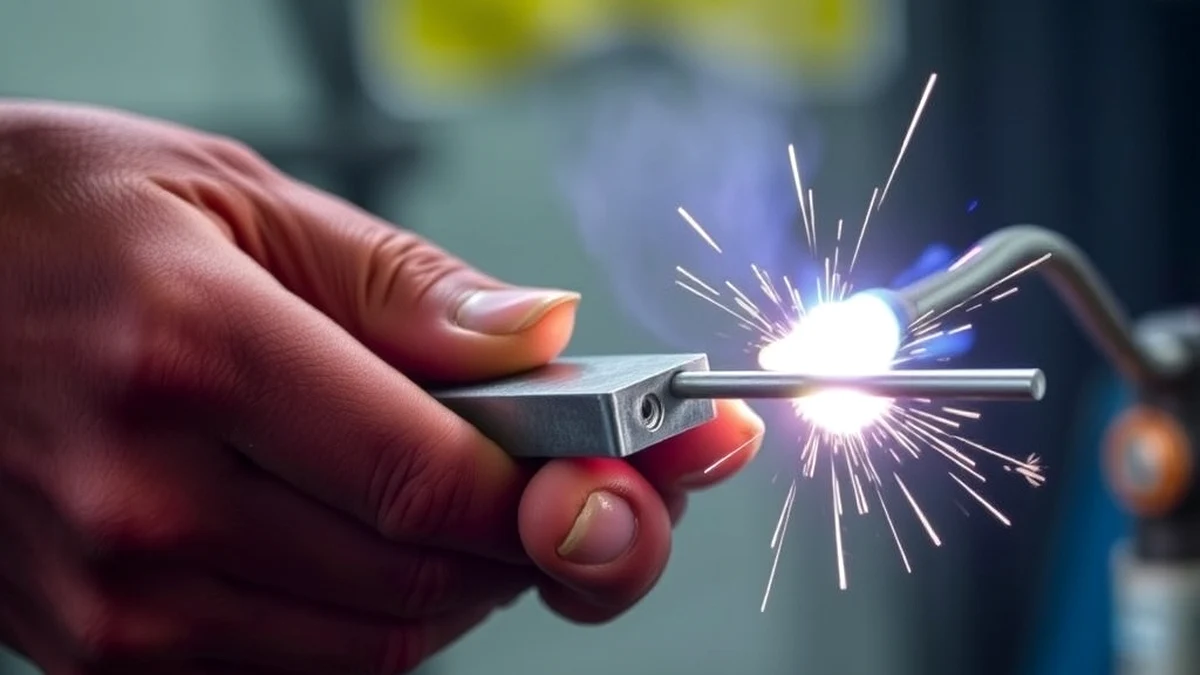
Aluminum brazing rods on steel = a coating, not a joint. The short version in five points:
The one-sentence verdict: use those rods on aluminum (where they work, within their limits), never on steel, and never where a failed joint endangers anything you can’t afford to lose.
“Aluminum brazing rod” covers two genuinely different product families — knowing which one is in your hand changes the advice.
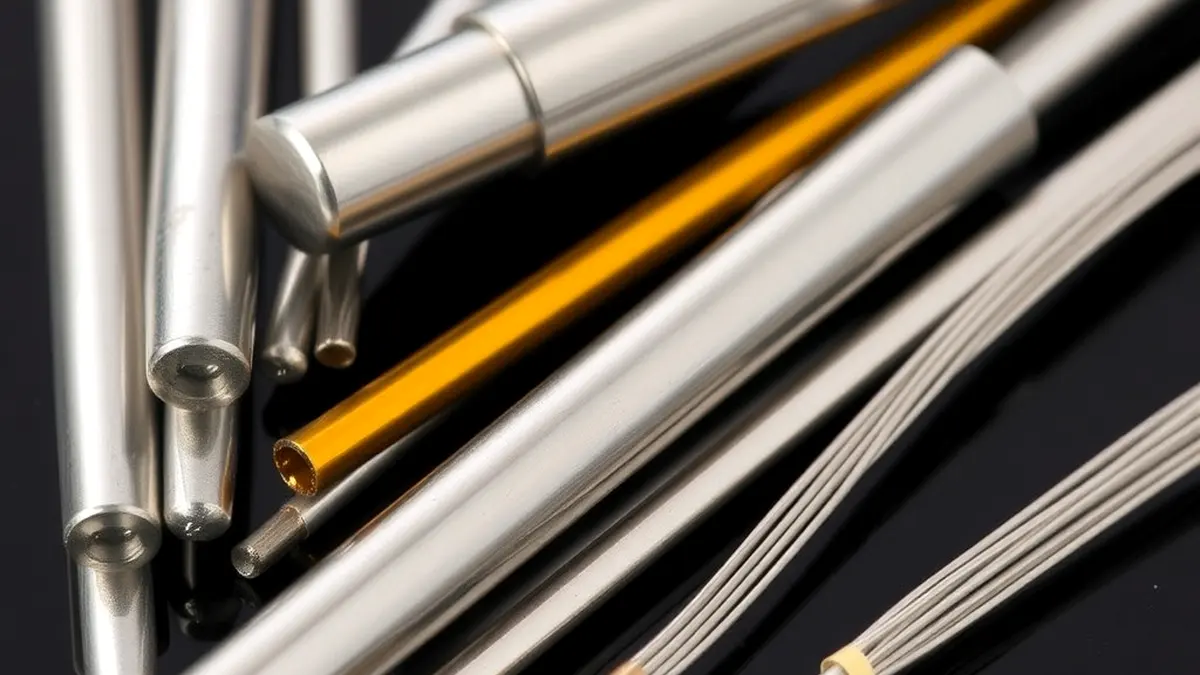
Brazing = filler melts, base metals don’t, and the joint forms by filler wetting + capillary action with (limited) metallurgical interaction at the interface. Soldering is the same idea at lower temperature (<450°C); the line between “low-temperature brazing” and “soldering” is mostly industry dialect — which is exactly why zinc rods at 380°C are functionally solders wearing a brazing label.
The critical implication: brazing joints are only as good as three things — wetting, cleanliness, and interface compatibility. Take any of the three away (steel + zinc filler = interface incompatibility, for starters) and the joint is decorative.
| Product | Typical flow/temp range | What it’s for |
| Zinc-Al-Cu “easy” rods | ~350–430°C (660–800°F) | Low-temp aluminum repairs, dissimilar-metal claims (mostly marketing) |
| Al-Si brazing rods (4047-class) | ~570–620°C (1060–1150°F) | Aluminum brazing with proper flux |
| Silver brazing alloys (BAg) | ~620–850°C | Steel, copper, tool steels — with correct flux |
| MIG-braze (CuSi3) | arc process | Galvanized steel fabrication (automotive) |
| Aluminum itself (melts) | ~660°C (1220°F) | The base metal that must not melt during brazing |
Notice the trap: zinc rods flow well below aluminum’s melting point (their selling point) — and equally far below anything that interacts with steel. The window that makes them safe on aluminum is the same window that makes them inert on steel.
To understand the failure on steel, first understand what a brazed joint is when it works — three mechanisms in sequence.
Every metal carries an oxide skin — aluminum’s is instant, tenacious, and melting-point-higher-than-the-metal (~2050°C vs 660°C), which is why aluminum brazing flux exists: dissolve/remove oxide, then wet the fresh metal before it re-forms. Steel’s oxide (mill scale, rust) is also a barrier, but its removal is mechanical/chemical cleaning — different chemistry, different flux assumptions.
Wetting = molten filler spreading over the base surface with favorable interfacial energy, forming intimate contact. Wetting depends on the filler-base pair’s thermodynamic affinity: zinc wets aluminum and copper reasonably; zinc on iron/steel at torch conditions wets poorly — beading, balling, discontinuous coverage. A filler that won’t wet can’t bond — no exceptions, no amount of flux theater.
The visible truth test: on aluminum, these rods flow out smooth and continuous; on steel, watch them — they crawl, ball, and sit proud. Beading on steel is the metallurgy announcing the incompatibility.
In a proper joint gap (typically 0.05–0.2 mm for brazing), capillary force pulls molten filler through the interface — coverage over the whole faying surface. Capillary can only distribute what wetting allows: poor wetting = capillary stall, voids, a joint that’s “filled” at the edges and empty inside.
The strongest brazed joints develop a thin interaction zone — dissolution, limited diffusion, a compound layer measured in microns — that makes the interface metallurgical rather than mechanical. This layer is the bond; it forms where the filler and base metal are mutually willing. Zinc-on-steel at 400°C: no meaningful interaction zone. The “joint” is filler sitting on texture — a coating with a shape.
On aluminum with these rods: flux removes oxide → zinc alloy wets aluminum → capillary fills the prepared gap → modest interface interaction forms → joint of brazing strength. Every step assumes aluminum. Swap the base to steel and step one (flux chemistry), step two (wetting), and step four (interaction) all fail simultaneously. That’s not a fixable parameter — it’s a system mismatch.
Four independent reasons — each alone would be enough.
Zinc-Al fillers have favorable interfacial energy against aluminum; against iron they don’t. Molten zinc is actually somewhat soluble in iron (zinc’s embrittlement of steel is a known hot-dip galvanizing problem — molten zinc attacks steel equipment), but that interaction at galvanizing temperatures (~450°C) and metallurgical contexts is not the same as brazing adhesion at rod temperatures with torch heating, and where zinc-iron compounds do form in hot-dip service, they’re brittle intermetallic layers — not a ductile brazed bond. Home-torch zinc rubbing on steel produces essentially none of even that: insufficient time, temperature, and flux chemistry to create a controlled interface.
Aluminum-rod fluxes are formulated for aluminum oxide (fluoride-based aggressive chemistries). They don’t clean steel oxide/scale effectively, and steel’s surface re-contaminates under torch conditions. Without a prepared, live surface, even a willing filler has nothing to grab. Steel brazing fluxes are a different chemistry entirely (for silver brazing, copper alloys) — the flux in the aluminum rod kit was never designed for the substrate you’re pointing it at.
The zinc rod’s flow range (~350–430°C) sits below the regime where iron surface diffusion and filler-base interaction develop meaningfully — and raising temperature to “help” crosses into melting/burning the aluminum side of the joint (if aluminum is present) or just degrading the flux. The joint process needs a temperature the base stack can’t provide. Silicon-aluminum brazing rods (higher temp) still don’t wet steel properly with home torch + aluminum flux.
Steel in a home/shop torch environment develops fresh oxide continuously; aluminum flux doesn’t protect it; the filler touches a moving target of scale. Result: bond strength dominated by mechanical keying into surface roughness — which is exactly as strong as it sounds (weak, inconsistent, failure-at-minimal-load).
If you don’t believe the theory, believe the experiment — this is the test anyone can run on scrap.
Piece of clean mild steel plate, piece of aluminum (for comparison), same rod, same flux, same torch, sensible PPE (safety basics).
Flux, heat base (not rod) to flow temperature, rub rod: filler flashes across the joint, flows smooth and continuous, lays flat, wets out with that characteristic mirror-edge. After cleaning: file test — the filler cuts like a soft metal bonded to the parent; bend test on a lap joint shows some joint strength — enough to feel real, because it is.
Clean steel, same flux, same rod, patiently heated:
The test’s conclusion, every time: on steel you made a zinc coating shaped like a weld; on aluminum you made a joint. The difference isn’t skill, heat, or flux quantity — it’s the substrate the alloy was designed around.
You do not need to trust this guide — you need a torch, scrap, and ten minutes. Run the protocol once per rod brand you buy; it generalizes to every “joins everything” claim you will ever meet.
Materials: clean mild steel offcut, matching aluminum scrap (control), the rod kit in question, torch, flux, wire brush, cold chisel, hammer, safety glasses, gloves.
Run the protocol and the metal list on the box becomes self-evidently fictional: the same rod that made a credible aluminum joint leaves steel with a deposit you can flick off with a thumbnail. From then on, every “bonds everything” listing you read gets evaluated against evidence you generated yourself — which is the only kind of evidence that ever held up a gate.
The rods that promise steel are worth dissecting, because the claim follows a repeating pattern.
The takeaway: the rod may be perfectly decent for aluminum and still be sold with a metal list that metallurgy doesn’t endorse. Read the box for what it is; ignore what the thumbnail promises about steel.
“But arc/plasma/laser processes do join aluminum to steel in industry — why not my torch?” Because when you push temperature and energy to where the two metals actually interact, they interact by forming brittle intermetallic compounds — and the entire engineering discipline around Al-steel joining is about controlling or avoiding those compounds.
Aluminum and iron have limited solid solubility and a family of intermetallic phases (FeAl₃, Fe₂Al₅, FeAl, etc.) that form at elevated temperatures with diffusion. These compounds are hard and brittle — thick layers crack under load, propagate fracture, and make joints that fail catastrophically rather than deforming. The famous welding rule of thumb — you can’t MIG-weld aluminum to steel directly — exists because arc energy creates thick intermetallic layers faster than any home process can control.
Industry does join aluminum to steel — with processes designed to keep interaction thin and managed:
The pattern: every legitimate method either (a) controls interaction to microns, (b) avoids melting entirely, or (c) inserts an engineered transition. A torch and a zinc rod does none of the three — it sits in the no-man’s-land where nothing useful happens.
When someone says “the industry does it,” what they mean is: capital equipment, qualified procedures, atmosphere control, testing, and metallurgists. The gap between that and a propane torch is the gap between an aircraft factory and a bottle rocket — same word (“join aluminum to steel”), unrelated activities.
Even if a filler-on-steel connection somehow held load (it doesn’t), the electrochemistry of aluminum touching steel in a wet environment adds a second failure timeline — corrosion.
Aluminum is anodic relative to steel (steel is more noble in the galvanic series). In an electrolyte (rain, road salt, condensation), an aluminum-to-steel contact makes a galvanic cell: aluminum corrodes preferentially — sacrificing itself against the steel cathode. The corrosion concentrates exactly at the joint interface, under the filler, hidden from inspection — eating the aluminum side of the connection you were relying on.
Automotive and marine practice spends serious engineering on Al-steel isolation: coatings, sealants, isolation washers, adhesive barriers, qualified filler systems. If the industrial joints need corrosion management, a hobbyist’s un-isolated zinc seam outdoors needs it twice. The takeaway isn’t “galvanic corrosion makes all Al-steel joints impossible” — it’s “Al-steel joints are a system problem, and a zinc rod addresses none of the system.”
Practical rules: wherever aluminum and steel meet mechanically, plan for the couple — barrier sealants, isolation, drainage, compatible fasteners (fastener choice). And never let “the rod said it would hold” replace the corrosion plan.
The question behind the question: how do you actually attach aluminum to steel? Here’s the honest menu, from garage to industrial.
Rivets, bolts, blind fasteners (pop rivets, structural blind fasteners), threaded inserts, sheet-metal screws (in the right stack), clamps. The most common Al-steel connection on earth — gates, brackets, body panels, enclosures.
Two-part epoxies, toughened acrylics, and polyurethanes bond aluminum-to-steel with load-distributing continuous seams — automotive closures and truck bodies literally run structural adhesive as a primary join.
The industrial process that does use zinc-aluminum family fillers on aluminum-to(galvanized)-steel — arc-controlled, parameter-qualified, often robot-executed. Worth knowing precisely because it looks like “the rod finally works”: the difference is the process controls heat, deposition, and interaction. Not a garage technique — but the science answer to “but zinc can join these metals”: yes, under orchestration a hand torch can’t provide.
Rotating tool plastically stirs the interface below melting — minimal intermetallic growth, strong joints, industrial/aerospace domain. Nobody’s doing this with a drill press on a fence post; it’s the answer when the application pays for it.
Engineered aluminum-to-steel plates (explosion bonding) used as adapter pieces: bolt or weld the aluminum side to aluminum, the steel side to steel. The metallurgically correct way to make a permanent dissimilar transition — with the cost and lead time to match.
Silver brazing (BAg alloys with proper flux) joins steel beautifully — but that’s steel-side brazing; joining aluminum-to-steel with silver alloys needs specific procedures and isn’t a hardware-store operation. The category of “filler that brazes steel” exists — it’s just not the aluminum rod in your drawer (Steel Brazing).
Arc-welding aluminum to steel (MIG-to-both) forms brittle intermetallics — universally discouraged outside highly controlled research/process contexts; the joint cracks in service. This is the “can you weld aluminum to steel?” canonical answer: no, not as a practical craft — the alternatives above are why.
For anything structural outdoors: fasteners (+ sealant/isolation), or adhesive + fasteners. For cosmetic/light-duty: adhesive alone may serve within its rated loads. For high-temperature or chemical environments: mechanical only, with material-compatible hardware. The zinc rod doesn’t appear on any of these lists for structural duty — because it isn’t a structural join.
Half this guide says “no”; this section earns the rods their drawer space — with boundaries.
A welder who can zinc-braze aluminum cleanly has a genuinely useful repair skill — brazed aluminum patches have saved plenty of radiators, cases, and ornaments. The mistake was never the rod; the mistake is the metal list that told you its talents extended to steel. Use it where its chemistry actually lives, and it earns the drawer space.
If the itch is “brazing instead of welding” — on steel, the procedures are established, strong, and entirely different from the aluminum rod.
Good for copper-to-copper (self-fluxing); on steel need flux and proper procedure — used in mechanical/HVAC-adjacent contexts per application.
Not “brazing” in the torch sense — a wire-feed process depositing silicon-bronze filler onto steel (arc on the steel, filler building the seam), the automotive standard for galvanized steel joineries where welding burns the zinc coating. Strong, controlled, a real fabrication technique — with a MIG machine and the right wire, not a torch rod.
Classic brass/bronze rod-on-steel torch brazing — historically standard for steel fabrication before arc welding; still valid for repair, art, and specific assemblies. Flux required, temperature management required, joint designed for brazing (close fit-up, capillary gaps).
| Filler system | On steel? | Strength class | Requirements |
| Zinc-aluminum “aluminum rods” | No | Near zero | Marketing |
| Al-Si brazing rods + Al flux | No | — | Aluminum system |
| Silver brazing alloys (BAg) | Yes | Structural-class brazed | Correct flux, temp, fit-up |
| Bronze/brass torch rods | Yes | Brazed-joint class | Flux, procedure |
| CuSi3 MIG braze | Yes (esp. galvanized) | Process-qualified | MIG equipment, wire |
| Silver solder (soft, Sn/Pb-Sn) | Low-strength only | Solder class | Mechanical/design limits respected |
The lesson: steel can be brazed — by fillers designed for steel with matching flux and temperature. The aluminum rod’s failure isn’t brazing’s failure; it’s the wrong filler for the substrate.
A rod kit costs little; a failed joint rarely does. Consider the ledger honestly: the gate that drops after three weeks must be unbolted, the smeared filler ground off both surfaces (heat and dust for nothing), the surfaces re-prepped, and the proper joint made anyway — you have paid twice, spent an afternoon, and still owe the corrosion plan. Multiply that by every seam in a project built on the same myth and the “cheap fix” becomes the expensive one. Meanwhile the correct paths carry predictable, quotable costs: a pack of stainless bolts, a cartridge of structural adhesive, an hour with a drill — all of it known before you start, all of it inspectable afterward, all of it still there next season. Filler choice is rarely where the money lives; joint consequences are where the money lives. The cheap rod is never the cheap joint.
The “works on copper!” half of the metal list deserves its own honesty pass — it’s the plausible cousin of the steel claim.
Cast bronze/brass decorative repair with zinc-family filler: workable within the same non-structural logic as aluminum repairs — clean, flux, fit, accept brazing-class strength.
Zinc rods on cast iron sit in the same “flows, looks joined, questionable strength” zone as steel — cast iron repair’s real tools are nickel rods (welding), silver brazing, or mechanical intervention, per the repair’s class.
Filler families have home turfs: zinc-aluminum → aluminum (and marginally copper-family); Al-Si → aluminum brazing; silver → steel/copper/precision; bronze → steel/copper torch work; silicon-bronze wire → steel MIG-braze. Claims that a single $10 rod owns every turf are describing flow, not joint quality — and flow is the least of what a joint needs.
Start from what the joint must do, not what’s in the drawer.
| Your goal | Right method | Wrong method (the trap) |
| Aluminum bracket ON steel post (outdoor, load) | Bolts/rivets + sealant/isolation, or structural adhesive + fasteners | Aluminum zinc rod |
| Aluminum-to-aluminum non-structural repair | Zinc/low-temp aluminum rods (proper prep) | Arc weld on thin/awkward sections unnecessarily |
| Aluminum-to-aluminum structural | TIG/MIG welding (proper alloy/filler) | Zinc rods (brazing strength only) |
| Steel-to-steel permanent strong joint | Stick/MIG/TIG welding | Any “rod” claiming to avoid the arc |
| Steel-to-steel solder-strength / non-arc join | Silver brazing (flux, temp) | Aluminum rod |
| Galvanized steel fabrication (automotive-style) | MIG braze (CuSi3) or weld + re-coat | Burning zinc with weld and hoping |
| Copper pipe (pressurized/plumbing) | Code-listed silver solder/brazing or mechanical per local code | Unspecified zinc rod |
| Decorative copper/brass art | Zinc-family or silver depending on strength | Worrying about it (if non-structural) |
| Cast aluminum crack | Brazing with proper prep + pre/postheat | High-heat weld if section is thin |
| “Can I join these two random metals?” | Fasteners or adhesive — first answer for everything odd | The magic-rod shelf |
When in doubt, bolt it. Mechanical joints forgive optimism; filler-on-wrong-metal doesn’t.
Myth 1: “The rod says it welds steel, so it welds steel.” Fact: Packaging is marketing, not metallurgy. No filler classification certifies zinc-aluminum rod for structural steel joints — the knife test and the service failure outrank the label every time.
Myth 2: “It flowed and stuck — that’s a joint.” Fact: Flowing and staying are wetting + surface tension + mechanical keying. A joint requires metallurgical interaction at the interface. On steel, that layer never forms; the deposit is a shaped coating.
Myth 3: “More flux will make it bond.” Fact: Flux cleans interfaces — it doesn’t create thermodynamic affinity between zinc alloy and iron. Aluminum flux doesn’t even clean steel oxide properly; the mismatch runs in both directions.
Myth 4: “I just need more heat.” Fact: Raising torch temperature burns flux, scales steel, and (if aluminum is in the stack) melts the aluminum. The wetting gap on steel persists at every temperature a home torch can reach with these fillers.
Myth 5: “Industry joins aluminum to steel, so my rod can too.” Fact: Industry uses CMT/laser brazing with parameter control, friction stir welding, explosion-clad transition joints — capital equipment and qualified procedures. The only similarity to your rod is the zinc filler family in one of those processes; everything else — heat control, atmosphere, interaction management — is absent from a hand torch.
Myth 6: “I grooved the steel, so now it’s mechanically locked.” Fact: Keying improves a coating’s peel resistance slightly. Vibration, shear, and thermal cycling still peel it; you have a stronger-shaped deposit, not a bond.
Myth 7: “Aluminum brazing rods and silver brazing rods are basically the same thing on different metals.” Fact: Different alloy systems, flux chemistries, temperature ranges, and substrate science entirely. Silver alloys braze steel because filler, flux, and temperature were co-engineered for iron. Zinc-aluminum rods were co-engineered for aluminum.
Myth 8: “A brazed joint is always weaker than a weld, so the difference doesn’t matter.” Fact: A properly made brazed joint (silver-on-steel, Al-Si-on-aluminum) carries real structural loads — designed, qualified, tested. A filler-on-steel non-joint carries the weight of whatever you hang on it right up until it doesn’t.
Myth 9: “If it holds today, it’s fine.” Fact: Filler-on-steel sits at near-zero strength from minute one; vibration and thermal cycling just reveal it. And if you somehow got adhesion, galvanic corrosion attacks the aluminum side of an Al-steel contact in wet service — two independent failure clocks.
Myth 10: “Welding aluminum to steel directly is the alternative, right?” Fact: Direct arc welding forms thick brittle Fe-Al intermetallics and cracks in service — it’s the other thing you don’t do. The real alternatives are mechanical fastening, adhesives, and process-controlled brazing/FSW.
Scenario 1 — The Gate Bracket. An aluminum gate bracket needs to attach to a steel fence post outdoors, carrying the gate’s hinge loads plus wind. Wrong path: zinc rod “welds” the bracket to the post — visually filled seam, near-zero bond, gate sags and drops after weeks, corrosion creeping at the interface. Right path: bolt through with stainless hardware, sealant barrier between dissimilar metals, holes deburred, torque checked — or structural adhesive + rivets for a clean look. Ten minutes of bolt-and-seal beats a season of failed rod experiments.
Scenario 2 — The Cast Aluminum Housing Crack. A cracked cast aluminum lamp housing needs repair; sections are thin and warp-prone. Wrong path: arc weld — blows through, warps, cracks adjacent. Right path: V-groove the crack, clean rigorously, preheat gently, zinc-aluminum braze with proper flux, dress after. This is the rod’s home turf — brazing-class strength where brazing-class strength is all the job needs.
Scenario 3 — The Steel Frame “Quick Join.” Two mild steel frame members should join without a welder on site. Wrong path: aluminum rod smeared along the seam because it was in the toolbox. Right path: for steel-on-steel, either borrow/rent a welder, or silver-braze with proper flux and fit-up if the load class allows brazed joints — or bolt with gussets. The aluminum rod never enters the decision because the base is steel.
Scenario 4 — The Copper Art Piece. A decorative copper sculpture needs copper-to-copper joins, non-structural. Judgment path: zinc-family filler wets copper well; the joint is solder-class, the load is negligible, the environment is dry. Acceptable within its class — while the same rod would be a betrayal on any steel armature carrying load. Same rod, different substrate, different verdict.
Scenario 5 — The Shop Believes the Video. A fabricator buys the “joins everything” rod after seeing a viral demo; client work depends on an aluminum-to-steel seam. The professional move: test the claim on scrap first — chisel test, bend test, loaded jig — watch it pop off the steel in seconds; then spec the mechanical/adhesive joint, quote it honestly, and keep the rod for aluminum-only repairs. Verification takes five minutes and saves the project.
Scenario 6 — Galvanized Post, Aluminum Sign. An aluminum sign plate mounts to galvanized steel posts on a coastal roadside. Full-system thinking: the join (stainless bolts through isolation washers or bonded pads), the corrosion plan (barrier sealant, drainage, compatible fastener metals), and the maintenance schedule (inspect, re-seal) — because galvanic couple plus salt air is a corrosion accelerator no filler rod addresses.
Do aluminum brazing rods work on steel at all? They melt on steel and can sit in a prepared seam as a deposit — but the bond is mechanical seating with near-zero tensile or shear strength. It fails under minimal load and vibration, and the deposit scrapes off with hand tools. “Works” requires a definition; as a joint, no.
Why does the rod flow so nicely on steel then? Flow is a property of the molten filler’s surface tension and temperature — not of its bond to the substrate. Zinc alloys flow at rod temperatures regardless of what’s underneath. Wetting (spreading with interface interaction) is different from flowing, and on steel wetting never completes.
Is there any aluminum rod that brazes steel? The aluminum-brazing families (Al-Si) are engineered for aluminum substrates with matching fluxes; steel-side brazing belongs to silver alloys, bronze/brass torch fillers, and CuSi3 MIG-braze — different filler systems with fluxes and temperature ranges co-engineered for iron.
Can I braze aluminum to steel with silver solder instead? Silver brazing on steel is excellent; joining it to aluminum introduces the same dissimilar-metal interface questions (wetting of aluminum side, galvanic management, procedure qualification). Home silver-solder-on-Al-to-steel joints are non-structural experiments at best — for real Al-steel joins use fasteners/adhesives, or industrial processes.
What actually holds aluminum to steel? Mechanical fasteners (bolts, rivets, blind fasteners), structural adhesives (often combined with fasteners), and — industrially — CMT/laser brazing with zinc fillers, friction stir welding, and explosion-clad transition joints. For garage work: fasten or bond, and plan for galvanic isolation.
I already brazed steel to aluminum with this rod — is it dangerous? If it’s a non-loaded, non-safety-related connection, it will likely separate in service; replace it with a mechanical or adhesive joint. If it carries load, hangs something overhead, or involves pressure — redo it properly now, before failure decides for you.
Do these rods work on galvanized steel? The zinc filler on a zinc coating doesn’t create a bond either — same wetting/interface failure, now with a coating that must first be burned off (toxic fumes, by the way) to reach steel. No path to a structural joint.
Are “bonds everything” rods scams? They’re often legitimate aluminum repair rods wrapped in marketing that overextends their reach. The rod can be useful; the metal list is the lie. Judge products by classification, test data, and your own chisel test — not by the packaging’s periodic table.
What’s the correct flux for brazing steel? Depends on filler family: silver brazing uses dedicated silver-brazing fluxes (borax chemistry family) matched to the alloy’s flow range; MIG-braze uses wire chemistry (CuSi3 is effectively self-shielding in process); torch bronze brazing uses its own fluxes. Aluminum-rod flux is never the answer on steel.
Will brazing aluminum to steel ever be a DIY technique? Not meaningfully — the processes that manage the interface (CMT, laser, FSW, clad transitions) are equipment- and qualification-heavy by nature. The honest DIY answer to Al-steel is mechanical and adhesive joining, done with the corrosion plan attached.
Can you use aluminum brazing rods on steel? No — the rods are engineered around aluminum’s chemistry (and marginally copper’s), and on steel they produce a mechanically seated coating with effectively zero joint strength. The flow, the appearance, the filled seam — none of it is metallurgy; wetting never completes, the interaction layer never forms, and the deposit parts company with the steel under the first real load, vibration, or thermal cycle. Push the heat up and you trade the problem for flux burn, steel scale, and (with aluminum in the stack) melted base metal. Every variable the home shop controls is already at its limit; none of them closes the interface gap.
The guide’s second half is the part that pays rent: join aluminum to steel mechanically — bolts, rivets, structural adhesive, ideally both with a galvanic isolation plan — or, for industrial contexts, the qualified processes (CMT/laser brazing, FSW, transition cladding) that manage the intermetallic layer with equipment a garage doesn’t own. Use the aluminum rods where they belong — non-structural aluminum repair, thin-section brazing, cast patching — where their low temperature and real aluminum-bond capability are genuinely valuable. And brazing steel itself is a real craft — silver alloys, bronze torch fillers, CuSi3 MIG-braze — with filler, flux, and temperature engineered together for iron, which is exactly what the aluminum rod kit was not.
The fence builder’s lesson generalizes: a filler’s honesty lives in its classification and its interface, not its advertisement. Match filler to base metal, respect the joint’s load class, plan corrosion where dissimilar metals touch — and when a rod claims every metal on the chart, believe the chemistry instead, and bolt the gate.